
$50,000 grant supports new healthcare workforce initiative

Contact Tameka Kenan-Norman
Executive Director of Public Information and Institutional Advancement
Edgecombe Community College
2009 W. Wilson St.
Tarboro, NC 27886
(252) 618-6560
kenannormant@edgecombe.edu
$50,000 grant supports new healthcare workforce initiative
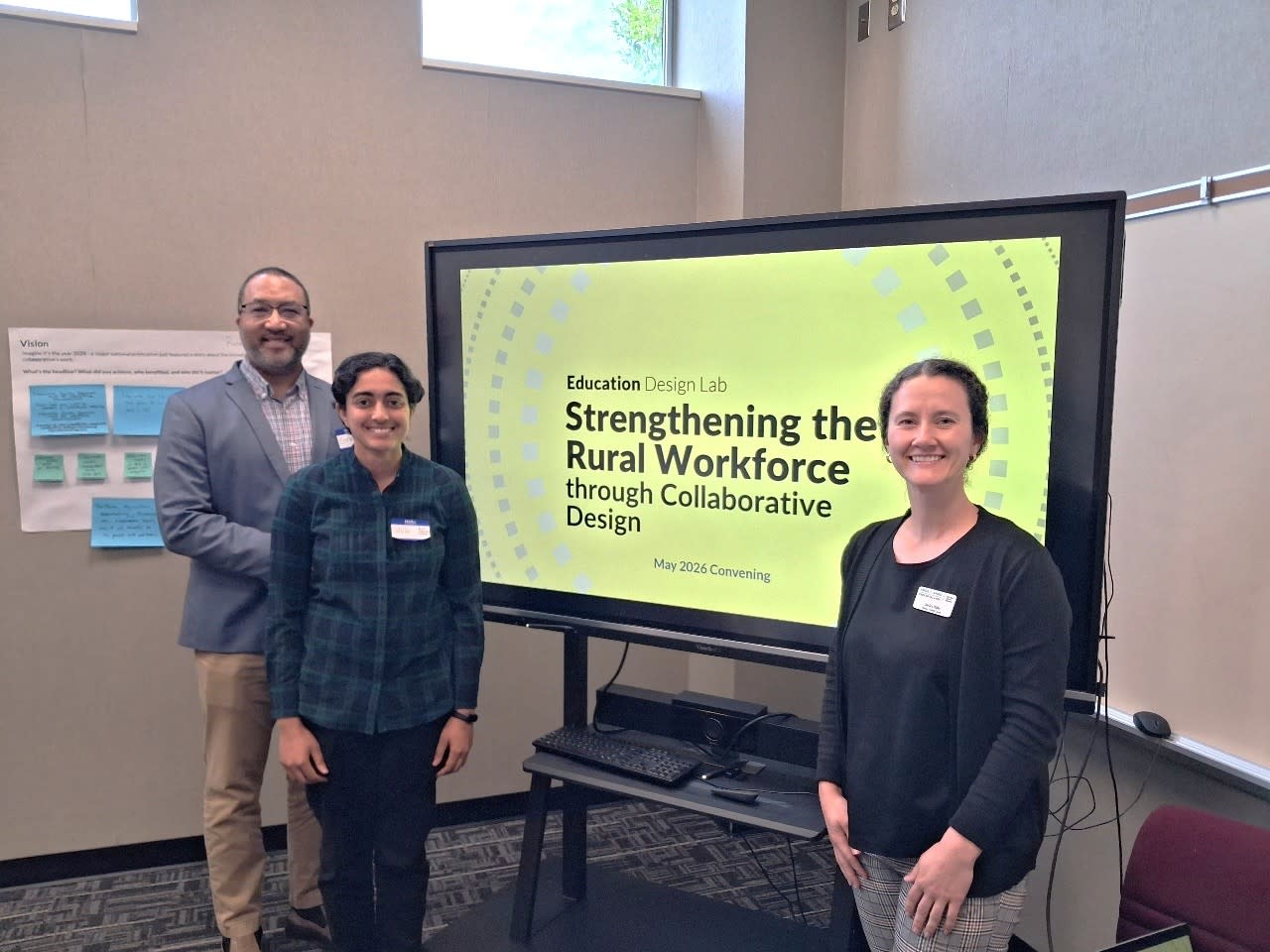
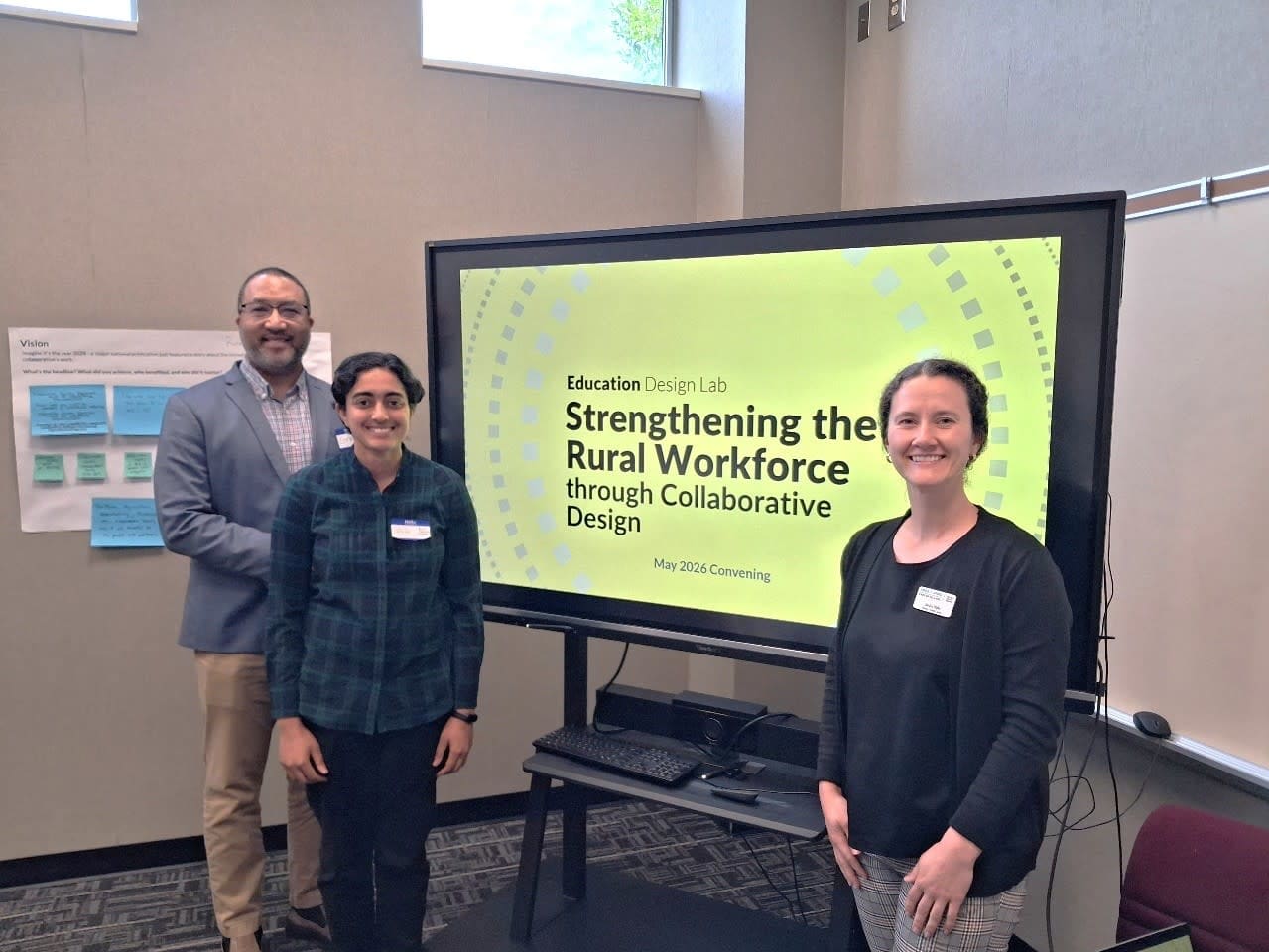
Pictured from left are ECC President Dr. Greg McLeod, Vichi Jagannathan and Jordan Blake during a recent cohort meeting in Georgia
Edgecombe Community College is partnering with the Rural Opportunity Institute, Area L AHEC, Strategic Twin-Counties Education Partnership and other regional organizations to develop clearer and more supportive healthcare workforce pathways for local residents. The work is funded by a $50,000 grant from the Education Design Lab’s Strengthening the Rural Workforce through Collaborative Design initiative, which aims to improve career routes in rural communities across the Southeast.
Vichi Jagannathan, co‑founder and co‑CEO of the Rural Opportunity Institute, said students often express interest in healthcare careers but struggle to understand how to enter the field.
“We’ve been hearing from students about what healthcare jobs are available locally and what they can do,” Jagannathan said. “But there seemed to be a gap.”
That gap includes limited guidance on structured employment pathways that provide on-the-job learning opportunities.
Jordan Blake, regional coordinator for Area L AHEC, said employers across the region report ongoing challenges in attracting and retaining healthcare talent.
“Rural areas aren’t necessarily as attractive as urban areas might be to younger students,” Blake said, citing results from a survey conducted as part of the Health Talent Alliance statewide initiative through the NC Center on the Workforce for Health. “A lot of the talent trained here ends up in Raleigh and larger areas. This has been a significant issue.”
The Education Design Lab grant seeks to address persistent challenges in the region’s healthcare pipeline, including high attrition in training programs and confusion among students navigating complex credential sequences, or the order they must follow for training, degrees and licensures.
“Healthcare is one of the most critical workforce needs in our region, and too many individuals who want to pursue these careers struggle to understand the training routes or feel underprepared for the rigor of health‑related programs,” said ECC President Dr. Greg McLeod. “By strengthening these pathways and embedding learner voice more intentionally in program design, we can help students build confidence, complete credentials and transition into meaningful careers that support the well‑being of eastern North Carolina.”
ROI, a trauma‑informed nonprofit that has worked in Edgecombe County since 2017, serves as the coordinating organization for the collaborative. Its role includes convening partners, aligning employer demand with community college preparation, and coordinating shared measurement across the initiative.
“This work is incredibly timely,” Jagannathan said. She noted that while students frequently report confusion about accessing work‑based learning, employers face shortages and high turnover in essential roles.
“This collaborative allows ROI and Area L AHEC to bring students, educators and employers together to design pathways that work for rural learners,” she said.